Floating Dock & Float Repair at the Lake of the Ozarks, MO
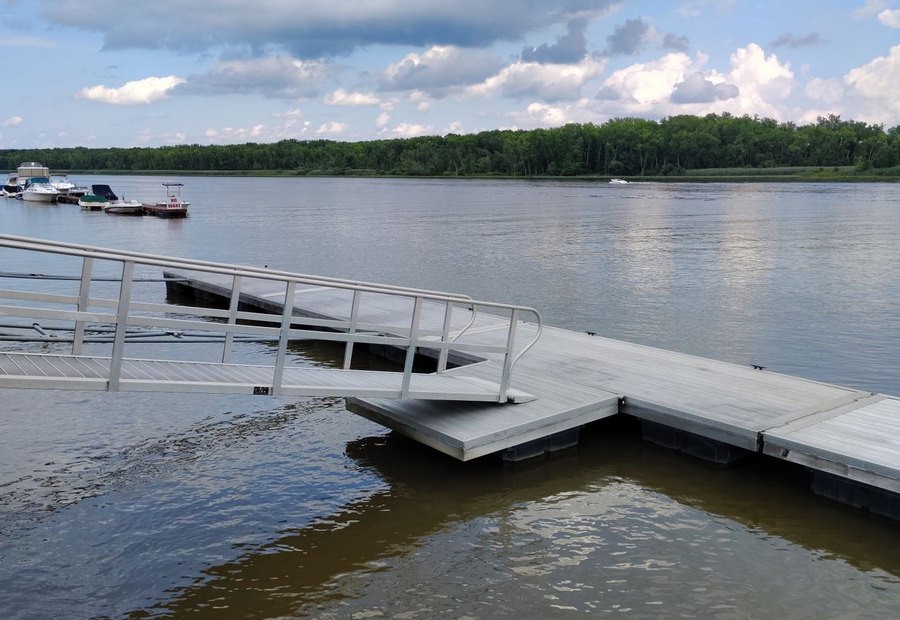
Every dock on this lake floats, which makes the flotation the one system the whole structure depends on. When a float fails, the dock lists, sits low, and starts dragging its frame and hardware underwater where rust and rot take over. Ozark Dock & Lift repairs and replaces dock flotation across the Lake of the Ozarks, bringing listing docks back to level with sealed, encapsulated floats that are built to last and meet Missouri's rules.
How a Float Fails
The classic failure here is the old bare polystyrene billet. It starts as solid foam with no shell, and over years the skin cracks, water works in, and the billet slowly waterlogs and loses buoyancy. You see it as a corner that sits low, a walkway that dips, or a dock that lists toward one side. Because the floats share the load, one failed float overloads its neighbors and the problem spreads. Catching it early is the difference between a float swap and a frame repair.
Encapsulated Floats, Not Bare Foam
When we replace flotation we install encapsulated floats: foam sealed inside a tough polyethylene shell, or sealed air-and-foam drums. Missouri rules call for encapsulated flotation so foam cannot break up and shed into the lake, and it is also simply the better float. The shell takes the abuse, resists cracking, and does not soak through the way bare foam does. Swapping old billets for encapsulated floats is one of the most common and worthwhile jobs we do.
Bringing a Dock Back to Level
A dock that has been listing has usually loaded its frame and hardware unevenly for a while. We replace the failed floats, check the floats around them that have been carrying the extra load, and re-balance the flotation so the whole dock rides level again. A level dock sheds water off its deck, keeps its hardware above the waterline, and stops flexing its frame at every joint.
Under-Floated Docks
Sometimes the problem is not a failed float but too little flotation for the load. A dock that got a boat lift, an upper deck, or a heavier boat may simply be riding too low for what it now carries. In that case we add flotation to match the load so the dock sits where it should with everything aboard. We tell you honestly whether you need more floats or replacement floats, because adding buoyancy around a sinking billet just hides the failure.
Done in the Water
Float work is done in the water from a barge or the dock itself. We jack a section, pull the failed float, set the new one, and lower the dock back onto it, section by section, without pulling the whole dock. It is disruptive for a day, not a season.
Is a corner of your dock sitting low? Call (573) 555-0147 before a soaked float drags your frame under. A level dock is a dock that lasts.
Why is one corner of my dock sitting low?
A float under that corner has taken on water. The most common cause on older docks is a bare polystyrene billet that has cracked and soaked through, slowly losing its buoyancy. One waterlogged float drops its corner, which loads the neighboring floats and the frame unevenly. We find the failed floats, replace them with sealed encapsulated floats, and bring the dock back to level.
Are foam floats allowed at the Lake of the Ozarks?
Bare, unencapsulated polystyrene is not the standard any longer. Missouri rules call for encapsulated flotation, meaning the foam is sealed inside a polyethylene shell so it cannot break up and shed into the water. When we replace floats we install encapsulated drums or billets, which is both the rule and the longer-lasting choice.
Can you just add floats instead of replacing them?
Sometimes, if the dock was simply under-floated for the load it now carries, such as after a lift or an upper deck was added. More often the call is a failed float that has to come out and be replaced. We assess whether you need more flotation or replacement flotation, because adding floats around a sinking one only delays the real fix.
How long do dock floats last?
A quality sealed polyethylene float lasts many years. Bare foam billets fail much sooner, especially once the skin cracks and water gets in. If your dock still rides on old bare-foam billets, replacing them with encapsulated floats is usually a matter of when, not if, and doing it before they sink avoids the frame damage a low dock causes.